A lifetime of lessons
By Don Wendt, Owner of Ecclesiastical Studios & Sons
At nearly 70, I’ve spent decades refining my skills in plaster restoration, learning from some of the best old-school tradesmen. The kind of craftsmen who lived by one core principle: “If you don’t have time to do it right the first time, when are you going to have time to fix it?”
It’s a lesson that has served me well, whether working in historic homes or restoring century-old churches. And it’s one that seems to have fallen by the wayside in recent years.
Back in the union days, professionalism was a point of pride. We showed up in crisp whites, polished boots, and ready to work. But now, as I watch modern techniques in YouTube and Facebook videos, I see painters cutting corners in ways that would have been unacceptable to seasoned professionals.
The lost art
Plaster repair is far more than simply covering cracks and holes with joint compound—it’s a skill that requires patience, expertise, and an understanding of traditional techniques.
A common mistake I see today is people applying joint compound over damaged plaster without properly prepping the surface. That might provide a temporary visual fix, but it’s not a lasting solution. Most of the time, the compound doesn’t bond well to the surface, causing it to break loose down the road.
Why prep matters
Plaster damage often occurs due to water infiltration, structural movement, or poor initial applications. When water damage affects plaster, cracks tend to pucker and expand over time. Simply floating over them without addressing the loose material underneath ensures that the issue will resurface later.
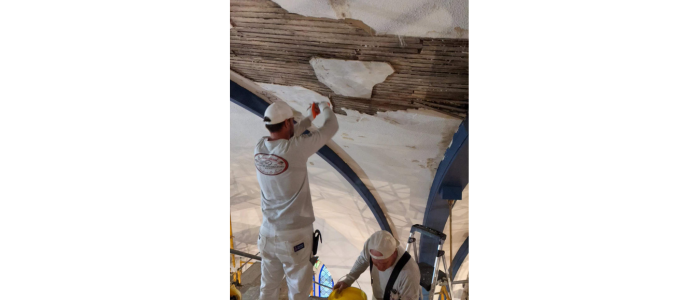
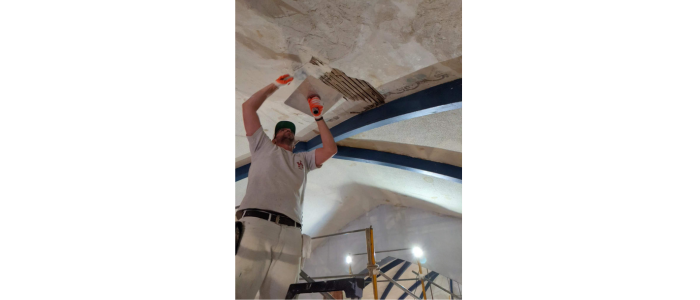
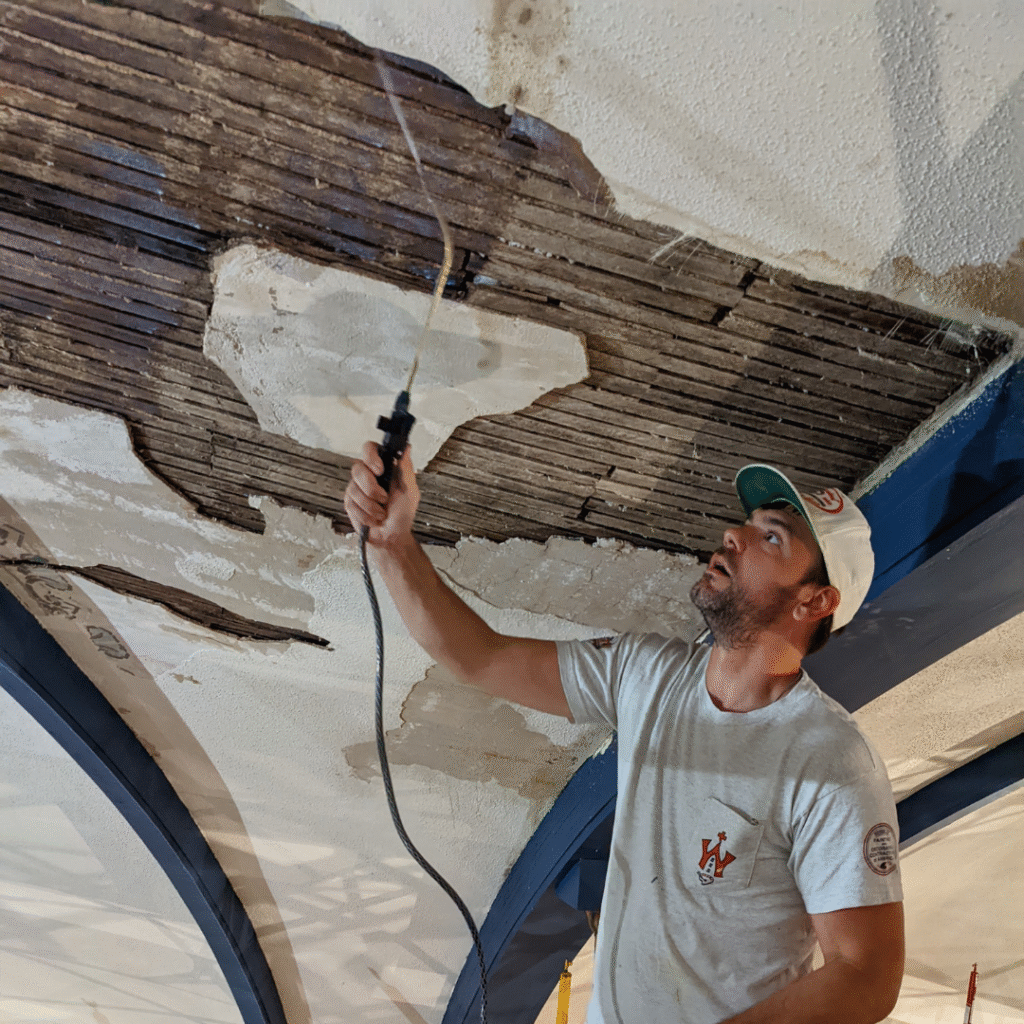
That’s why the first step in any restoration job is scraping out loose plaster and opening up cracks fully to ensure a solid base before applying fresh material.
This process takes time, and it’s not glamorous work—it’s dirty, labor-intensive, and requires careful attention to detail. But skipping this step guarantees that the repair won’t hold up over time.
Strengthening the base
Once the damaged plaster is removed, we assess whether the remaining surface is stable. Some plaster, depending on its composition, can be powdery or weak, requiring reinforcement before repairs can begin.
That’s why we always apply a masonry conditioner before patching. This helps harden the surface, ensuring that the fresh plaster adheres properly and doesn’t simply flake away.
One of our go-to products for this step is Behr Concrete and Masonry Primer, which does an excellent job of strengthening compromised surfaces before new applications.
The right application
Once the surface is conditioned, we move to the actual application process.
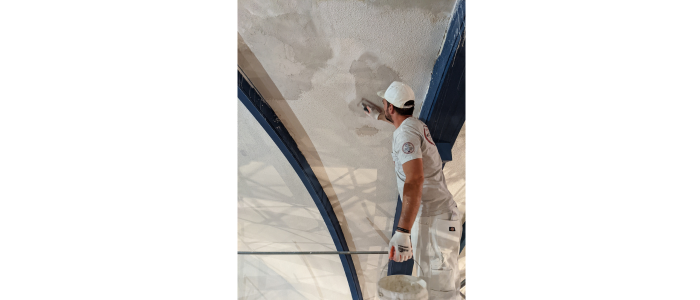
Traditionally, we use a Hawk and Trowel, along with a variety of float knives, to apply USG Structo-Lite Plaster in thin, controlled layers.
One critical mistake that inexperienced painters make is applying plaster too thick in one coat. While it may seem efficient, it actually causes longer drying times, uneven curing, and cracking down the road.
Instead, proper plaster repair involves multiple thin layers—usually two or three coats—depending on the depth of the repair.
Each layer must partially set before applying the next one. This ensures that the bond between layers is strong and stable, preventing the plaster from pulling away or cracking over time.
Blending & Finishing
The next critical step is feathering the edges and ensuring the new plaster blends seamlessly into the surrounding surface.
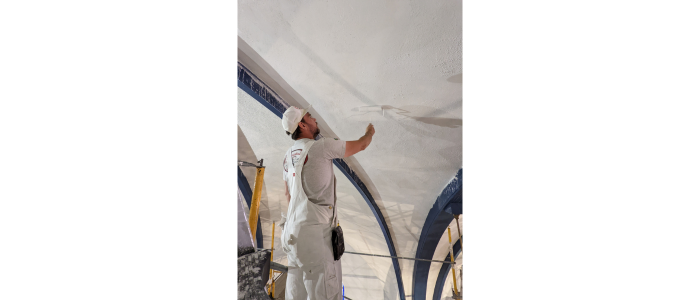
Once the final coat is in place, we use a sponge trowel to smooth and integrate the repair. This step is crucial—it prevents the patched area from standing out and ensures a consistent texture across the wall.
The most overlooked step
One of the biggest mistakes in plaster repair is rushing the painting process. Plaster requires ample curing time, and painting it too soon traps moisture, leading to bubbling, peeling, and eventual failure.
Beyond curing, primer selection is just as important. You can’t use acrylic waterborne primers because plaster has a high alkalinity (pH level) and won’t allow proper adhesion.
Instead, we always use an oil-based primer such as Zinsser Cover Stain or an alcohol-based primer like Zinsser White Shellac.
Matching texture
One thing that separates professional restorers from standard painters is attention to texture.
Inexperienced painters often fill cracks with joint compound without considering how the patch will blend with the rest of the wall. This results in visible seams and mismatched textures, especially when light hits the repaired surface.
Depending on the project, we either use sponging techniques to roughen or smooth out patches so that they merge flawlessly with the original surface.
Restoring historic churches & homes
At Ecclesiastical Studios & Sons, plaster restoration is just one element of our work.
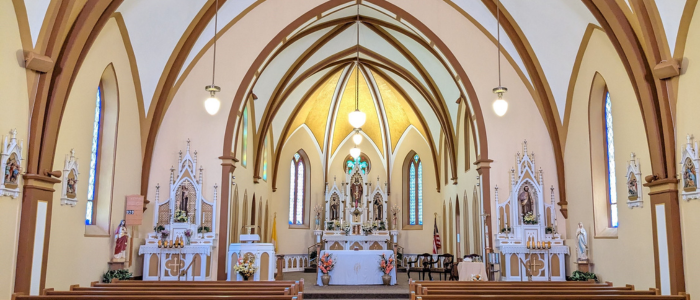
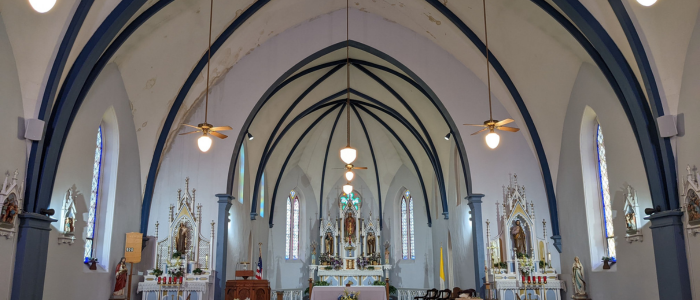
Our projects often last 20+ weeks, involving scaffold rigging, general painting, intricate stencil work, and decorative designs inside historic churches.
Beyond walls and ceilings, we also restore altars, statues, and the stations of the cross.
Many of the century-old statues are fragile molding plaster, requiring extreme precision to repair without further damage. Sanding, peeling, and paint removal must be done with great care, preserving the original details while reinforcing structural integrity.
Plaster vs. sheetrock
Plaster has enduring qualities that sheetrock simply lacks. While drywall crumbles and fails when exposed to moisture, plaster remains repairable unless it fully separates from the lathe.
In historic homes and churches, restoring original plaster is always preferable to covering it up with sheetrock. Keeping historical materials intact preserves the authenticity and craftsmanship that makes these structures special.
Craftsmanship endures
Plaster restoration is not a job for the impatient—it’s an art form that demands dedication, expertise, and respect for tradition.
Taking shortcuts might save time, but true craftsmanship ensures durability, beauty, and longevity that stands the test of time.