The long journey from the border to business ownership.
By Kevin Hoffman
The canal was cold and smelled like sewage.
Myrna Solorzano and the man next to her slipped into the water near El Paso under the cover of darkness. By the time they climbed out on the other side, they were covered in mud, trash, and filth.
They were supposed to be picked up, but no one came.
Cold and exhausted, they walked until they reached a Walgreens. Myrna’s phone had been ruined in the water. The man with her was terrified. They hadn’t eaten in two days.
Inside the store, Myrna stood dripping near a pay phone, trying to decide what to do next.
A woman standing nearby noticed something was wrong.
Myrna asked if she had a few quarters.
The woman handed them over and asked, “Are you okay?”
Myrna tried to answer yes. But as the woman turned to walk away, the words caught in Myrna’s throat.
“Actually, I’m not,” Myrna said, breaking down. “I just crossed the border. I’m tired. I’m hungry. I haven’t eaten in two days.”
The woman paused. Her daughter-in-law protested. You can’t just take strangers home.
But the woman shook her head.
“This is what God wants me to do,” she said.
Childhood in Mexico
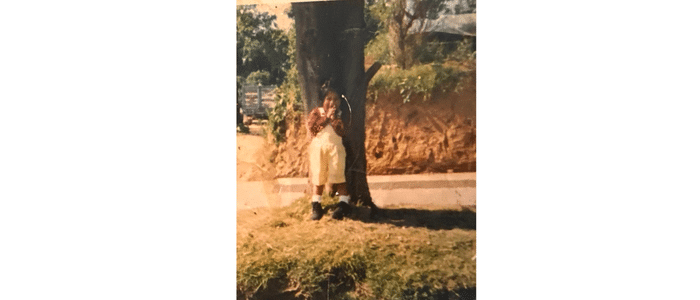
Myrna’s earliest memories are of Mexico City countryside where she and her younger brother were raised by their grandmother, Maximina.
Their mother, Cecilia, worked constantly, traveling back and forth to the city for jobs that kept the family afloat. Some days she harvested vegetables or flowers; other days she worked in food production.
“My mom worked a lot,” Myrna remembers. “My brother and I were pretty much raised by my grandma.”
Their grandmother’s home sat near large flower fields, and the rhythms of rural work shaped everyday life. The adults worked long days harvesting and packing flowers while the children played nearby. It was a modest life, but it was familiar and stable.
Then one day, everything changed. Myrna remembers standing outside with her grandmother when a man arrived carrying a denim jacket. The jacket belonged to her mother. He handed it over along with a message that stunned the family: Cecilia had left. “She’s crossing the border right now,” the man told them.
For Myrna and her brother, the next year and a half were some of the hardest of their young lives. Their grandmother was already elderly and still working in the flower fields, trying to care for the needs of two young children at the same time. The household struggled financially, and the absence of their mother weighed on everyone.
Those months stretched into nearly two years before Cecilia finally returned. When she did, she had a promise: She was going back to the United States, but this time, she would bring her children with her.
The First Crossing
One morning, everything suddenly felt rushed. Her grandmother was out working in the fields when her mother hurried the children along, telling them they were going to the supermarket in the next town.
Myrna remembers wanting to say goodbye to her grandmother before they left, but there wasn’t time.
“We’ve got to hurry,” her mother kept saying.
They never stopped at the supermarket. Instead, they drove four hours to her stepfather’s hometown and stayed there for about a week. That was when Myrna realized what was really happening. They were leaving for America.
The first attempt didn’t last long. Authorities caught them and sent them back into Mexico. For a child, the experience was confusing and frightening. For the adults organizing the crossing, it was simply another setback.
They tried again. They joined a group trekking through the desert at night, guided by two “coyotes” hired to lead them north. There were families and several other children among them. The conditions were harsh, and not everyone could keep up.
“We walked for a couple nights and days,” Myrna remembers. “People stayed behind.”
Along the way, Myrna noticed objects scattered in the sand—water bottles, boots, pieces of clothing. One of the coyotes warned the group not to go near them. There could be a dead body nearby.
Eventually the group crossed into Texas. But even then the journey wasn’t finished. Migrants still had to pass through interior checkpoints without being discovered.
Myrna and several others were crammed into a car and told to stay silent.
“Don’t cry. Don’t say anything,” the adults warned.
Somehow they made it through.
Life in Colorado
Colorado was supposed to be the place where everything got better. Instead, the first years were some of the hardest Myrna would experience.
When the family arrived, they moved into a crowded house with relatives. Nearly nine people were living in the same space, and Myrna, her brother, and the other children slept together on the floor in a single room.
Eventually Myrna, her brother, and their mother moved out of the crowded house and into a small place of their own. The new apartment was in a rough neighborhood, with tiny rooms and only one bathroom for the entire family, which grew to include another brother.
Most days, the responsibility of caring for the younger children fell to Myrna. Her mornings started early. She would wake her siblings, prepare simple food, and help them get ready for school before catching her own bus.
“I had to take care of my brothers,” she says. “I had to cook for them, get them ready for school.”
The weight of that responsibility, combined with the instability around her, eventually pushed her into a deep depression. In middle school she began therapy. At the time she was struggling with suicidal thoughts, something she says she kept largely hidden from the people around her.
“I was planning how I was going to do it,” she recalls.
When she told her therapist, authorities intervened. She was removed from the home and placed into foster care.
Eventually she moved back in with her mother, but the situation had not improved. The arguments with her stepfather, the drinking, and the instability continued. By high school, Myrna began rebelling against the life she felt trapped in.
By the time she was 17, the pressure inside the house had reached a breaking point. For the first time in her life, Myrna made a decision entirely on her own: She bought a plane ticket, and left the United States behind.
You Can’t Go Home
When Myrna boarded a plane back to Mexico, she believed she was escaping a life that had spun out of control.
“I just felt like I had to leave,” she says.
For a time, returning to Mexico brought a strange sense of clarity. She found work picking flowers in greenhouses, the same kind of agricultural work her family had done years earlier.
The days were brutally hot and sweat soaked through her clothes as she worked under plastic roofs, cutting and sorting flowers for long hours. The work was hard, but it gave her something she hadn’t felt in a while: purpose.
Eventually she moved to Mexico City to be closer to family, but stability remained elusive. She bounced between temporary places to stay before eventually living with her godmother. Myrna found work at a government-run food program that served inexpensive meals to people who had nowhere else to go. The pay was about 150 pesos a day—barely enough to survive.
Even that arrangement didn’t last. Her godmother eventually told her she could no longer support another person in the house. Myrna was on her own again.
With no money and little food, the situation deteriorated quickly. Pride kept her from asking for help, even when she was hungry. The moment that stayed with her most came one afternoon when she found herself digging through trash cans looking for something to eat.
“That was one of the lowest points in my life,” she says.
Standing there, she realized she had run away from her problems in the United States, but the life she had fallen into in Mexico was even more dangerous and unstable.
There was only one way forward: She would have to cross the border again.
The Second Crossing
The second crossing was nothing like the first.
When Solorzano had walked through the desert as a child, she barely understood what was happening around her. This time she was older. She knew exactly what could go wrong.
The process began in one of the small houses migrants often wait in before attempting the crossing. The room was crowded with men who had been there for weeks, waiting for their chance to move north. Myrna was the only woman there.
At one point, the entire operation nearly fell apart. The smuggling group running the house had failed to pay its monthly bribe to local authorities. Armed men arrived and demanded that everyone inside come with them.
The migrants quickly realized what was happening. “They were going to take us,” Myrna remembers. “They were going to use us as bait.”
Chaos broke out as people scrambled to escape before the situation spiraled further. Eventually the coyotes decided to move two migrants immediately—Myrna and a man she didn’t know.
That decision sent them toward the canal. The crossing itself was brutal. The water was freezing and filthy, carrying sewage and debris through the current. By the time they climbed onto the bank near El Paso, both were soaked and exhausted.
They walked to Walgreens. Inside the store, she stood dripping near a pay phone, trying to figure out what to do next.
Myrna was nineteen years old, and once again, she was starting over.
Starting Over Again
When Solorzano returned to Colorado, the problems she had left behind were still waiting for her.
The tension with her mother hadn’t disappeared. The arguments and verbal abuse continued, and the fragile relationship between them remained strained. But by then Myrna was older, and she was determined to build something different for herself.
Not long after returning, she met the father of her children. The two met at a dance club while out with friends. What started as a conversation turned into a partnership that lasted for years.
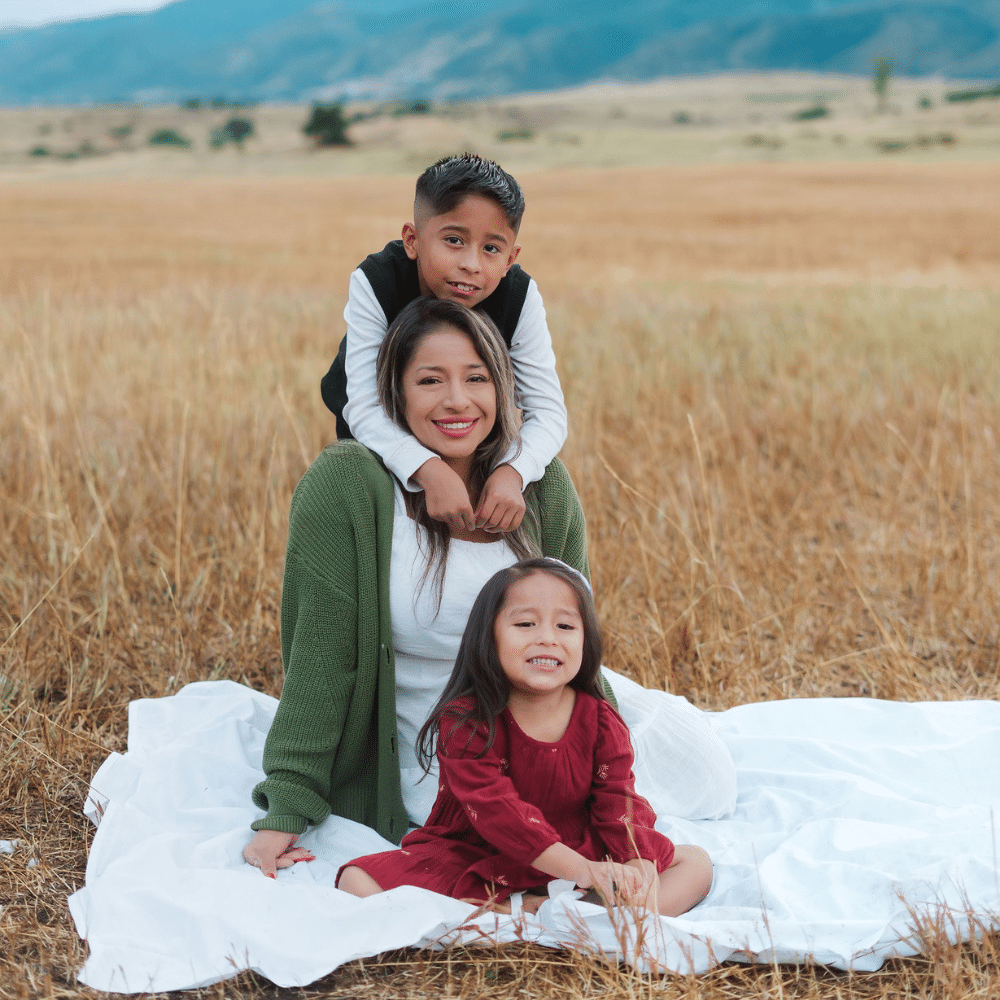
They eventually had children together and began trying to build a life that felt more stable than the one either of them had grown up with.
But stability was still hard to come by. Both of them worked constantly, picking up whatever jobs they could find. Sometimes that meant long shifts and odd hours. Money was always tight, and the future felt uncertain.
Then one morning Myrna had an idea: Let’s start a painting company.
Neither of them had any real experience painting houses. They didn’t have a van, equipment, or savings.
What they did have was determination and one asset they could parlay into startup capital: a 2012 Nissan Maxima. They used the proceeds from the sale to buy ladders, tools, and a van.
Their first job revealed just how little they knew. A project that experienced crews might finish in a couple of days took them an entire week.
The early mistakes piled up. Equipment they bought from a friend turned out to be barely usable. Sprayers didn’t work. Ladders were bent and unsafe. Jobs took longer than expected, and profit margins were thin or nonexistent.
But slowly, job by job, they began to figure it out, and for the first time in her life, Myrna could see the possibility of building something of her own.
Finding Community
Building the company meant more than just learning how to paint. It meant figuring out how to run a business while raising young children and trying to hold together a life that had never been particularly stable to begin with.
For Myrna, those two worlds collided almost immediately.
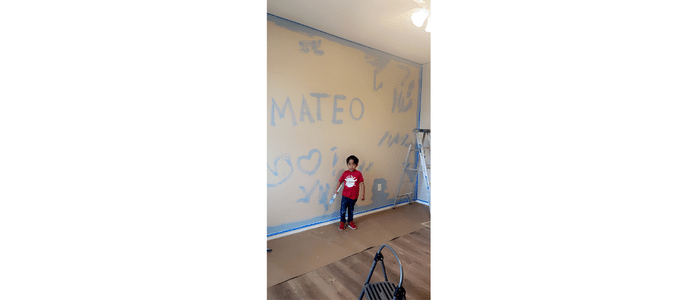
When childcare fell through, Myrna brought her son to the jobsite. Some days, he waited in the van with a tablet while she sprayed houses. Other times she tried to improvise a safe space by taping plastic across a small closet so overspray wouldn’t reach him.
The workdays didn’t end when the painting stopped. After hours on ladders or spraying trim, she would come home to another shift doing laundry, cleaning, cooking, and taking care of the kids.
The breakthrough came when she made the decision to step away from the brush. Instead of painting every job herself, she began focusing on finding work, managing customers, and building systems for the business.
Much of that responsibility fell on her. Her business partner, the father of her children, spoke limited English, which meant she handled most of the communication with customers, contractors, and suppliers.
The hours grew longer. and with them came something many entrepreneurs recognize but rarely talk about: Loneliness.
For years, Myrna pushed forward largely on instinct, learning through trial and error. Then one night, while scrolling through videos at 3 a.m., she stumbled across something she had never heard of before: The Painting Contractors Association.
Through that introduction Myrna discovered an entirely different world of contractors who were building structured businesses, sharing ideas, and helping each other grow.
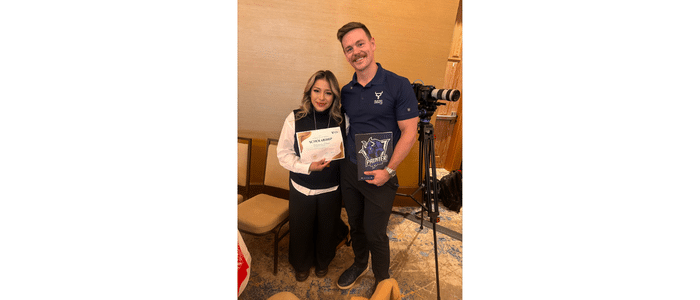
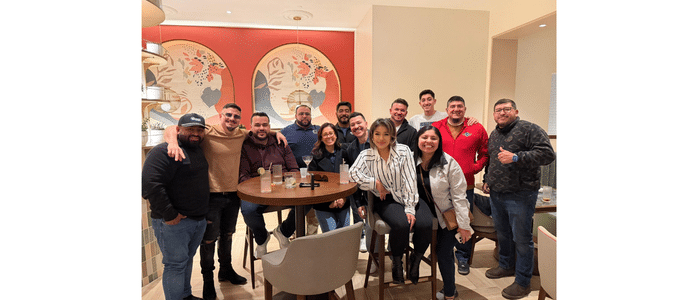
Her first major PCA event was Women in Paint. Walking into the room, she wasn’t sure what to expect. But what she found surprised her. For the first time since starting her company, she was surrounded by other women who were trying to do the same thing—run businesses, raise families, and navigate an industry that hadn’t always made space for them.
Listening to their stories, something clicked. “I realized I’m not going crazy,” she says. “It’s hard being a business owner!”
Creating Her Future
The experience shifted something inside her. Contractors were talking about revenue numbers she had never imagined. Others openly discussed their struggles, their failures, and the challenges of balancing work and family.
For Myrna, the most powerful part wasn’t the business advice. It was the community.
“You make your future with the people you surround yourself with,” she says.
Slowly, her network began to grow. Conversations turned into friendships. Questions turned into mentorship. And the same community that once inspired her started to rely on her voice as well.
Now Myrna is working with Hispanic contractors to help others take the same leap she had made.
“We don’t want to just be looked at as subcontractors,” she says. “We want to be looked at as business owners.”