
By Bracken Anderson
A full painting schedule can hide the same estimating mistake for months. When we dug into data from hundreds of painting companies over the years, we learned that many painting companies had consistent work coming in, and their crews delivered quality work – but for some reason, the margins weren’t what the owners expected them to be. It didn’t make sense. These owners came up through the trade and learned from some of the best in the business. If you sat across from them and asked them to estimate a job, they could give you a quote without much thought. So where are the margins going?
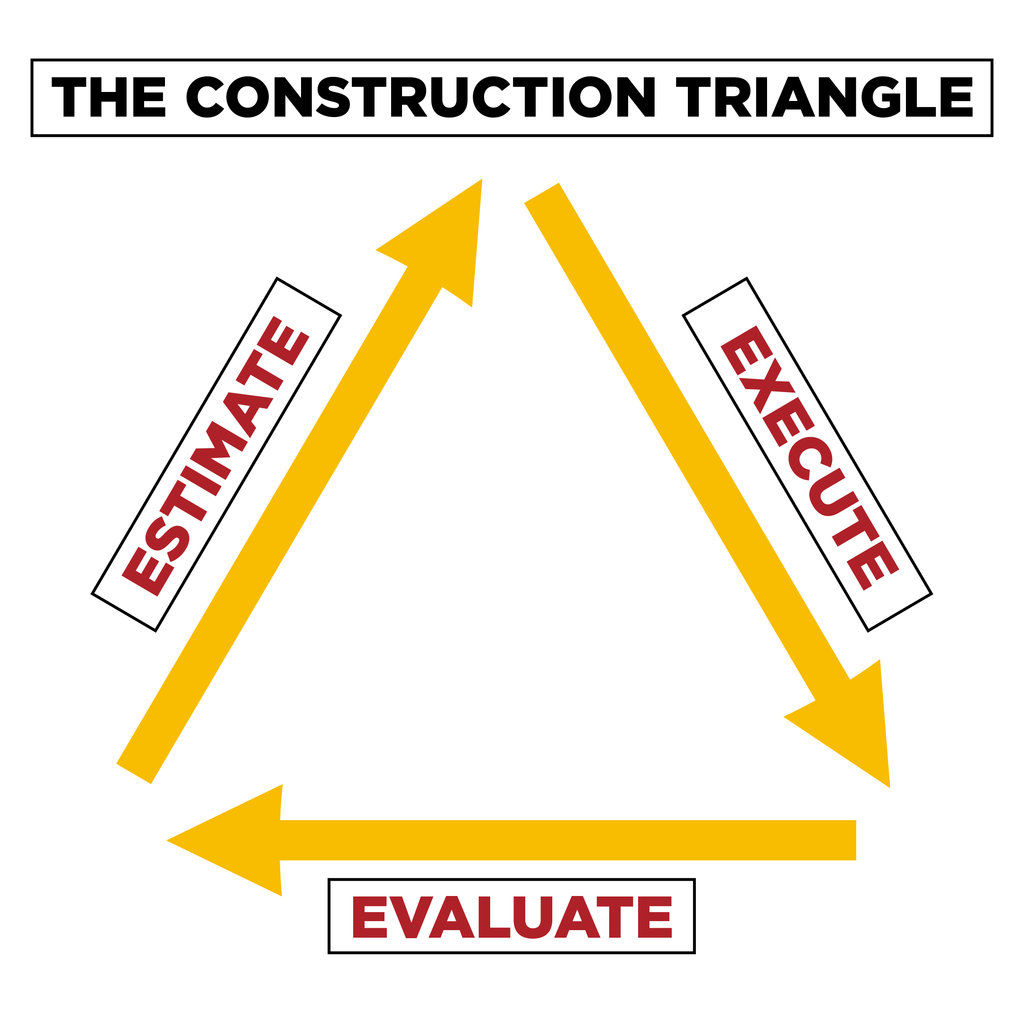
The answer often comes down to how three parts of the business work together: Estimate, Execute, and Evaluate. We like to call it the construction triangle.
The Construction Triangle
Every painting job flows through all three sides of the construction triangle. The estimate drives the work. The work feeds the evaluation. The evaluation feeds the next estimate. Every job is one trip around the triangle, and every job should make your next bid a bit sharper. Owners who came up through the trade bring years of experience to estimating and execution. They know what good work takes. But evaluation asks a different question: Did the job perform the way we expected, and what should we change if it didn’t?
When you’re on a job, those questions may be answered naturally. You see the extra scrapings or return trips, and you’ll account for them the next time you submit a quote to a client. But as operations begin to expand and more crews are working at the same time, it’s hard to keep track of the details. Awareness of the small details doesn’t always travel. Your team might know why prep ran long, but that information may not reach whoever is in charge of the next estimate. As a result, a painting company can easily continue to make the same mistake that the crew already understands.
How One Miss Becomes Five
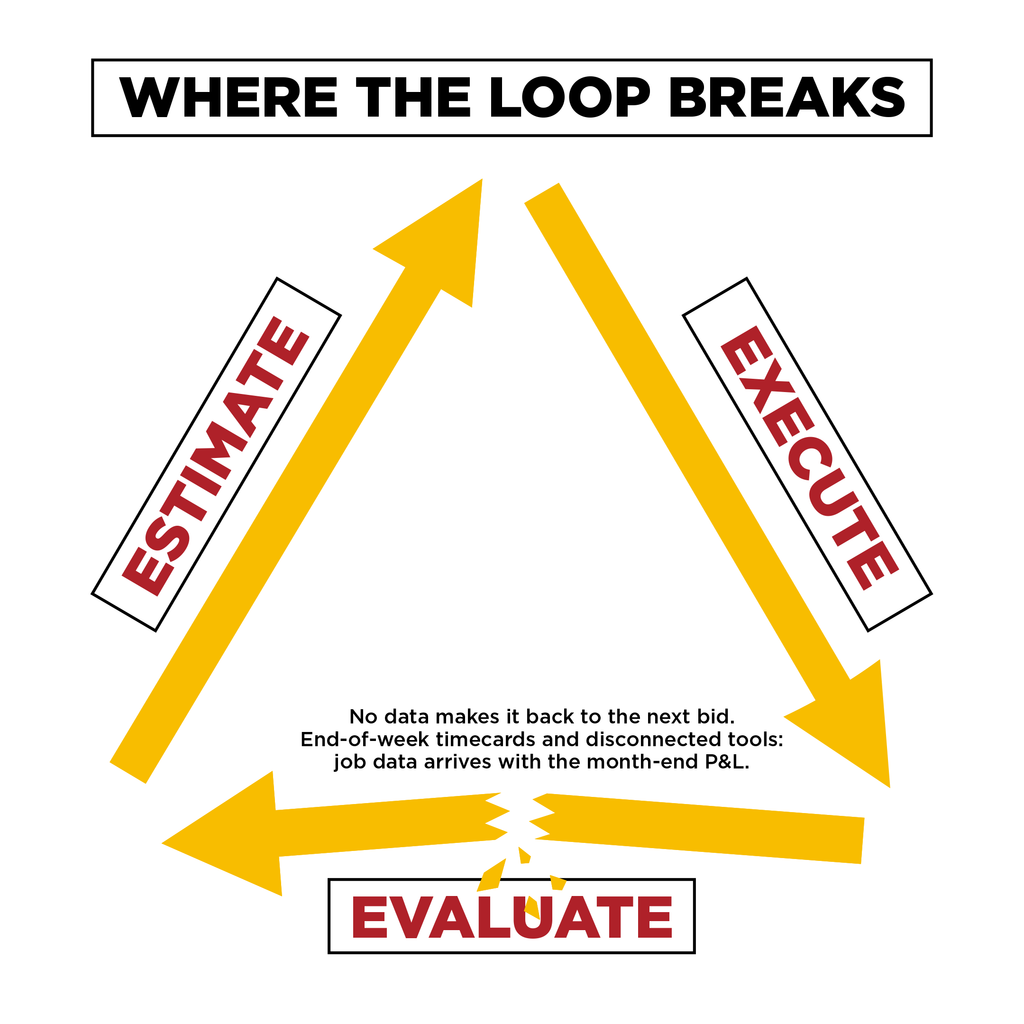
Say you bid an exterior repaint at 120 labor hours. Your crew shows up, does great work, and the homeowner is thrilled. Hours come in at the end of the week, pieced together from memory on Friday afternoon. They go straight to payroll and are never tied to a specific project. Nobody lines them up against the bid, because the bid lives in your estimating software and the hours live on the timecards.
A few weeks later, the month-end P&L lands. Margin looks a little thin, but the bank balance is up, the schedule is full, and it feels like a good month. So you move on. Here’s what you didn’t see: Prep ran 30 hours over. At an assumed loaded labor cost of $35 an hour, that’s $1,050 that walked off the job. And because nobody caught it, you bid the next four exteriors the exact same way. Same production rate, same miss.
Across those five jobs, that’s $5,250 in additional labor. Your P&L will show the expense. It won’t tell you that the same prep allowance kept coming up short. By the time you spot the pattern, the same assumption may already be built into several jobs you’ve sold.
This isn’t the result of laziness. It’s due to the fact that the numbers you need never end up in the same place. The bid sits in your estimating software. The hours sit on timecards or in payroll. Materials sit in receipts and the accounting system. Change orders sit in a text thread with the client. Those records aren’t connected, and lining it all up by hand takes time most owners don’t have. So nothing changes. Instead, owners fall back on the one number that’s always easy to find: the bank balance. But more cash this month than last doesn’t tell you which jobs made money and which ones you paid to be on. That’s running blind.
Closing the Loop
Now, let’s imagine running that same exterior repaint job again with a different process, using a software tool like BusyBusy to track field data. This time, the owner builds the estimate with separate labor allowances for prep, application, and trim. Those estimated hours become the field budget in BusyBusy, so the foreman knows the targets before work starts.
When the project starts, the crew clocks into each phase from their phones. On day three, the foreman sees prep at 60% of the budget with only half the house scraped. He calls the office, and together they add a painter for two days so the application stays on schedule. That helps protect the completion date, but it doesn’t automatically recover the extra labor cost.
When the job closes, the owner reviews the cost-code report with the foreman. Prep finished 18% over budget – the third comparable exterior job where it ran long. They check the notes and photos and find the same condition on all three: heavily peeling siding needed more scraping than the estimates allowed.
With that information, the owner can adjust the next estimate to include a higher prep allowance for that condition. Application and trim stay the same. What the crew learned on the last job now informs how the company prices the next one. Same owner. Same crew. Same skill. The only difference is that the numbers showed up while there was still time to use them. Three habits make that happen, one for each side of the triangle:
- Get the bid to the field. The hours you estimated by phase become the crew’s budget. Your foreman knows the target on day one, not after a job closes
- Capture time daily by phase. Same day, on site, not from memory on Friday afternoon. Being kind of close on a timecard works about as well as being kind of close to the shade of paint your client chose
- Compare every job to the estimate, and feed it back. While the job runs, ask three questions: Was there a change order we didn’t add to the budget? Did we overstaff? Did we underbid? When it closes, compare it to the last few comparable jobs.
When the same miss shows up two or three times, update that rate before the next bid goes out. But make sure to investigate the cause before changing the allowance. Added scope, preventable delays, and an underestimated task each call for a different response. This process isn’t about rushing your crew. Tracking hours by phase shows you where the time goes. It doesn’t tell anyone to cut corners. Track touchups and return trips as their own phase, and you’ll see quality problems in the numbers too. The last step is what closes the triangle. Evaluate doesn’t just grade the last job. It tells you how to price the next one and which jobs you should be bidding on.
Start With One Job
You can’t improve what you don’t measure, and you can’t measure what you don’t track. The trade skills that built your company cover two sides of the construction triangle. The third side is what keeps it profitable. So pick one job next week. Before it starts, give your foreman the bid hours for prep, application, and trim (or whatever phases you prefer to break a job into). When it closes, compare the actual hours against the estimate. That’s one full trip around the triangle, and it’s how every bid you send in 2027 gets built on the job before it, not a gut feeling and a bank balance.
Bracken Anderson is a Senior Partner Manager at AlignOps BusyBusy. She has spent the last four and a half years working with painting and construction companies on technology that simplifies their daily operations, from time tracking to job costing to safety.