Renovating Cotton Bowl Stadium in time for the Red River Showdown
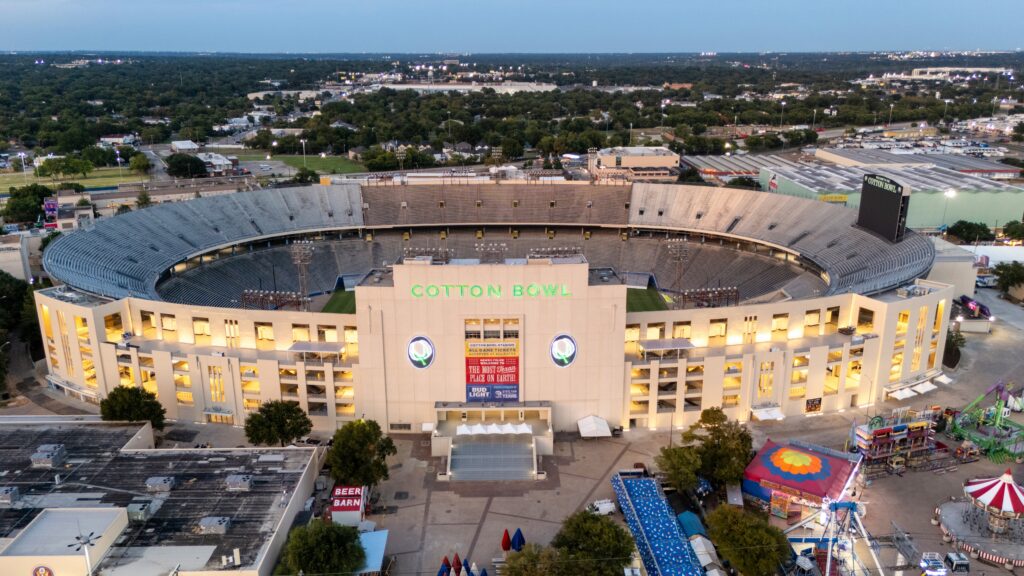
In Texas, football is religion, and Cotton Bowl Stadium is the church.
The Cotton Bowl Classic was first played in 1937 in Dallas. Unlike other bowls that have bounced between cities, it stayed put, becoming a fixture of college football’s New Year’s Day lineup.
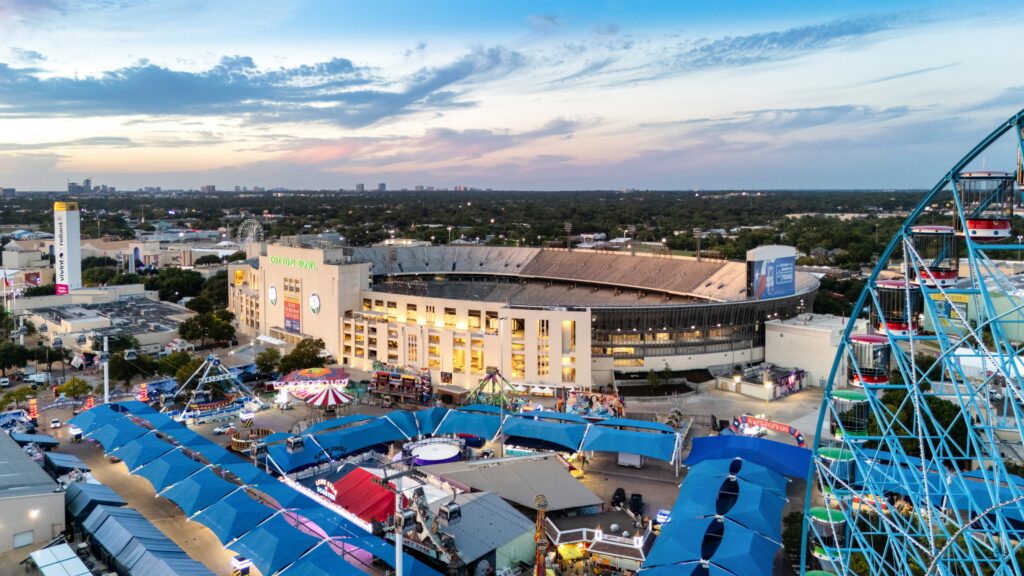
Beyond the bowl game, the stadium is synonymous with the State Fair of Texas, which hosts the annual Red River Showdown between the Texas Longhorns and the Oklahoma Sooners.
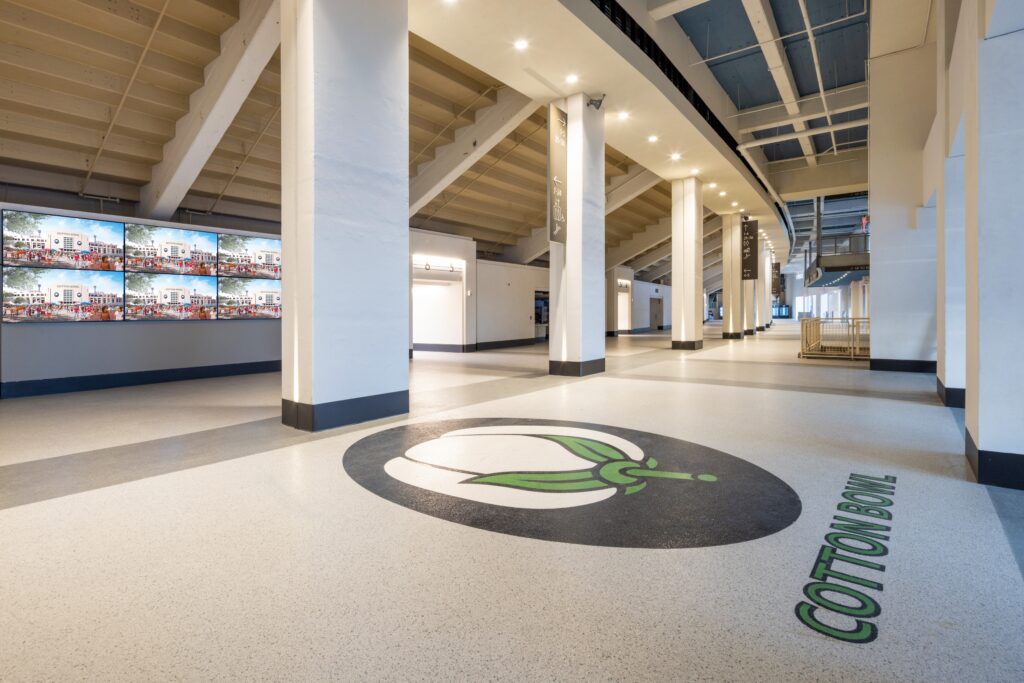
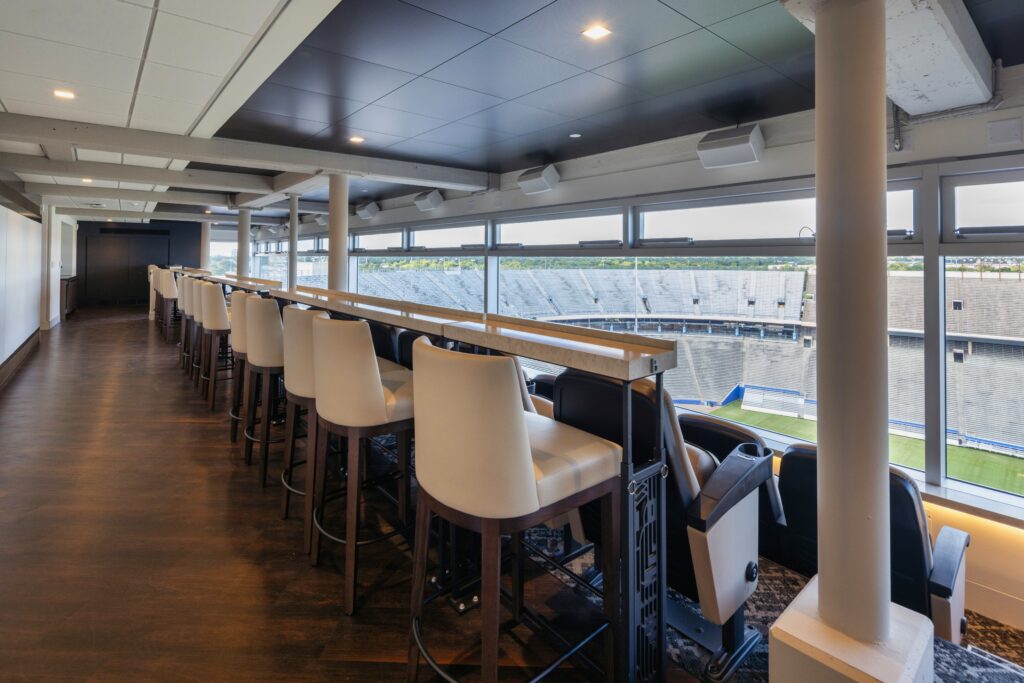
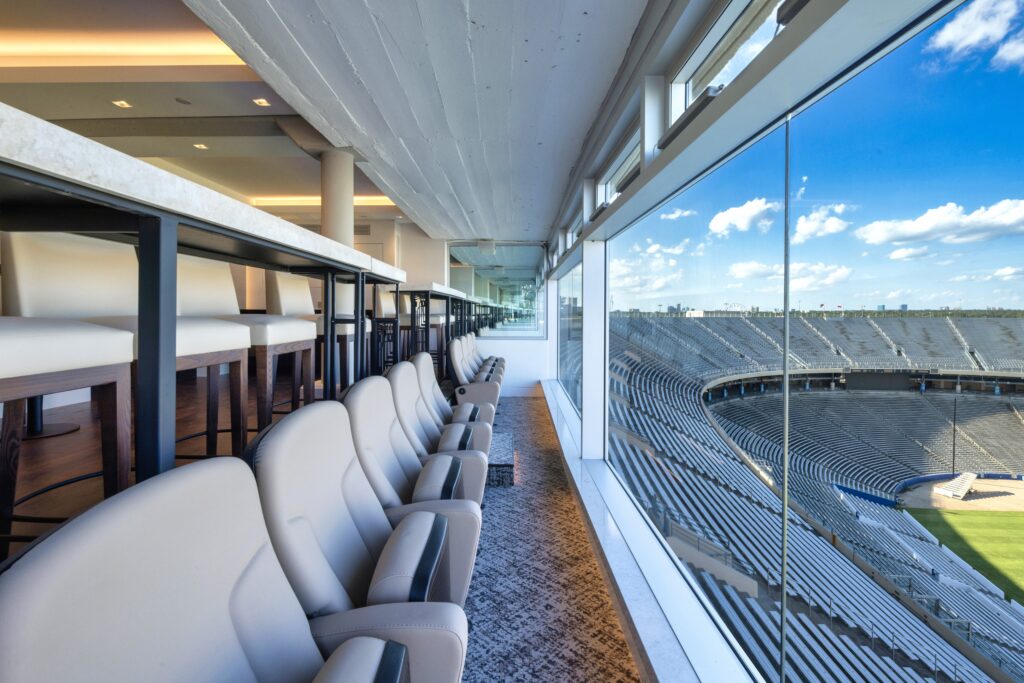
In 2025, it was time to renovate. The upgrades would widen concourses, expand the press box, and improve gathering areas—all while preserving the identity fans associate with the historic venue.
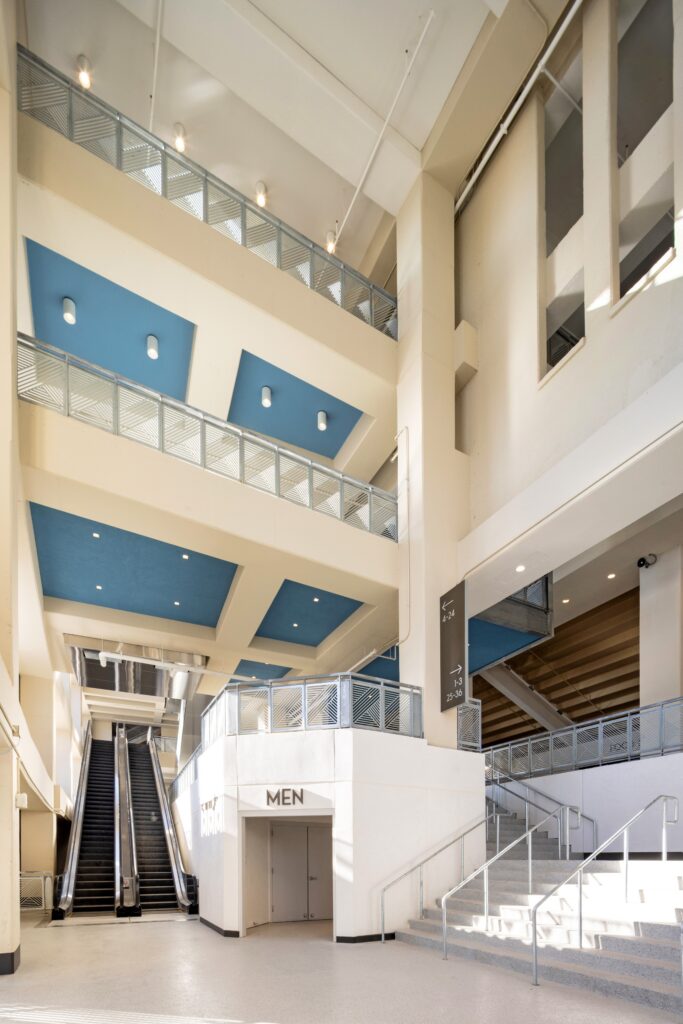
The stadium contains nearly a century of additions and renovations, meaning crews constantly moved between original materials and newly constructed spaces. Some areas required detailed drywall repair and texture matching, while others involved coating exposed steel, piping, and mechanical systems dozens of feet above the concourse floor.
Crews worked at height using lift equipment to reach ceilings, exposed piping, ductwork, and structural steel. The range of substrates from nearly a century of renovations required careful texture matching and coating selection to keep the final result seamless.
The work stretched across nine levels of the facility, often with multiple trades operating simultaneously in tight work zones. Schedules shifted constantly as construction progressed, forcing crews to stay flexible and coordinate closely with the general contractor to keep production moving without slowing surrounding trades.
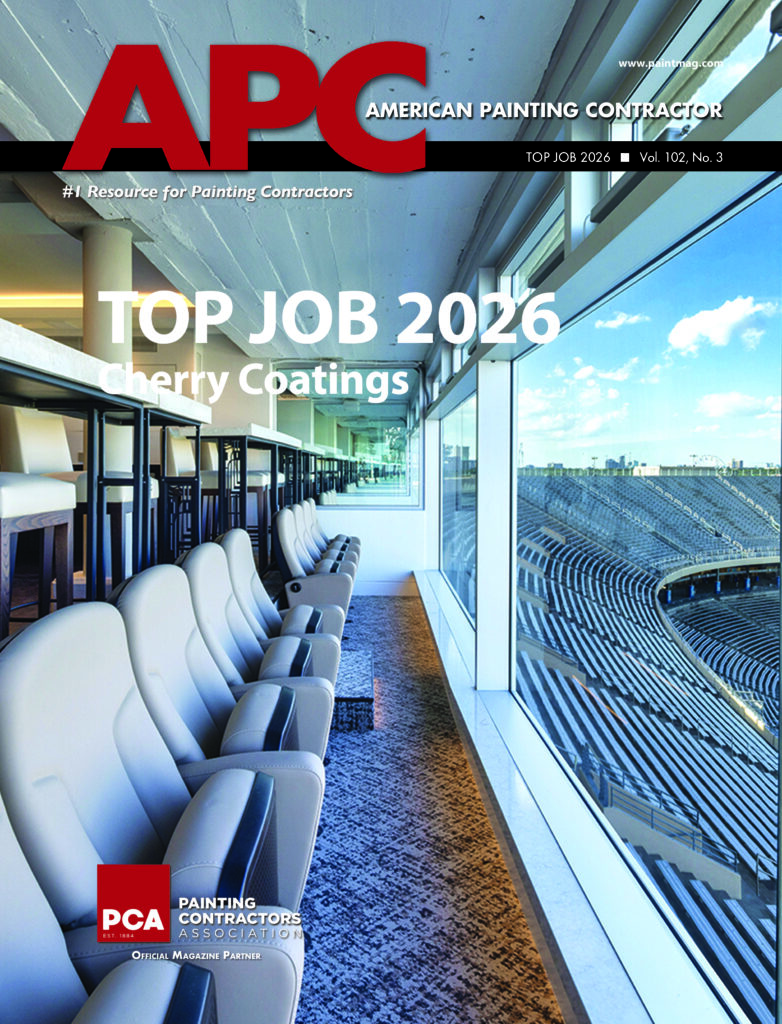
The crew repaired drywall, rebuilt surfaces damaged in previous renovations, and thoroughly sanded and cleaned each area. Coating systems were applied across concourses, suites, support spaces, and exterior gathering areas, covering structural steel, drywall assemblies, and exposed mechanical systems.
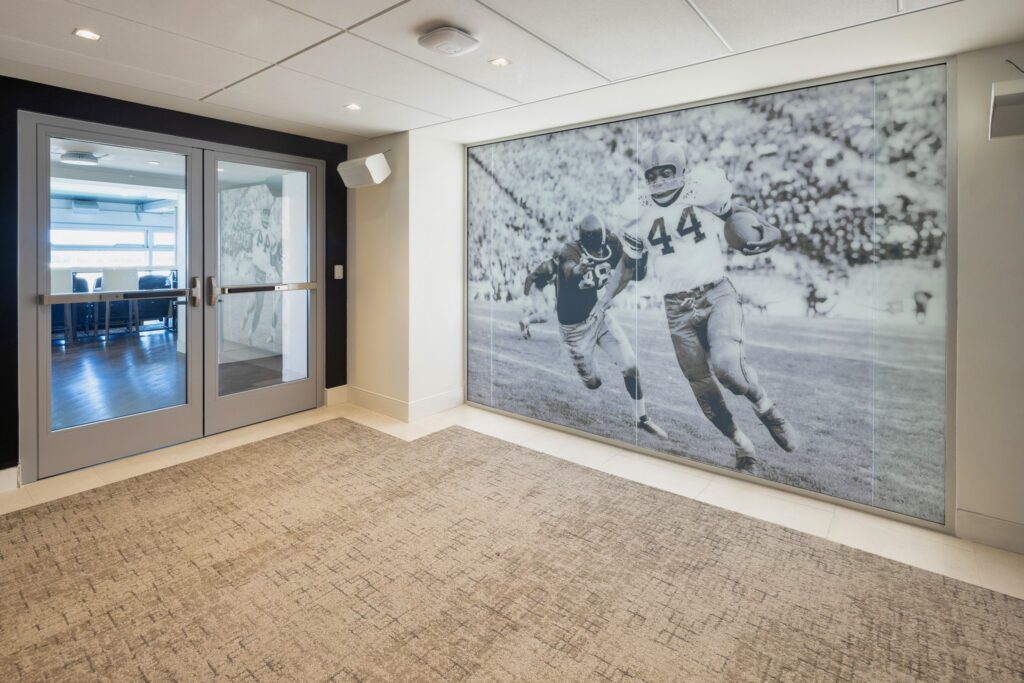
The renovation also included several high-end wallcovering installations throughout hospitality suites and media spaces. One of the most striking features was a large custom wall graphic depicting the Cotton Bowl itself. Installing those materials required careful alignment to ensure the finished appearance matched the upgraded feel of the renovated stadium.
The complexity was high, but Cherry Coatings came prepared with a Visual Production Plan that included a two-week look-ahead schedule and clearly defined weekly goals.
Cherry Coatings also credits its close coordination with the general contractor, J.E. Dunn Construction. A project of this scale required multiple trades working simultaneously across several levels of the facility.
Safety remained a constant focus. Each day began with a Job Hazard Analysis to identify the specific risks tied to scheduled tasks. On a site that evolved daily, those meetings kept crews focused and accountable.
The project took six months to complete, finishing on deadline and in time for the State Fair and kickoff at the Red River Showdown.
“For Cherry Coatings, this project represents the type of work that defines a TOP JOB: a technically demanding environment, a historic and high-profile venue, and a finished product that enhances the experience for thousands of visitors each year.”