The overnight jobsite had to disappear before the next day
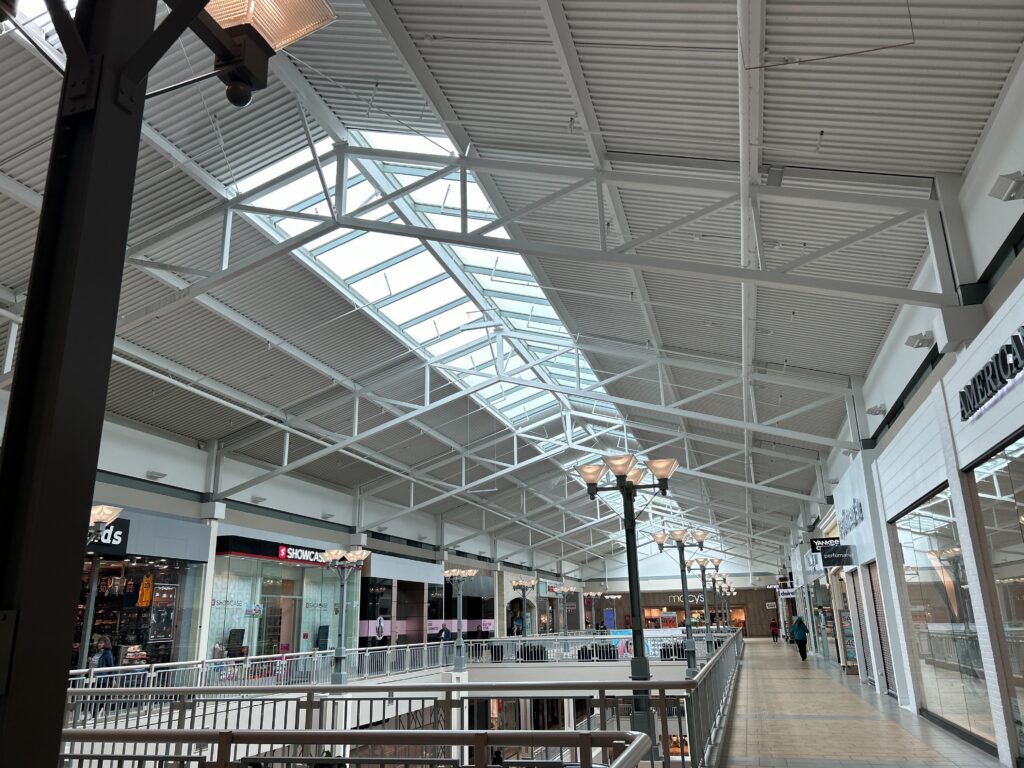
During the day, Bridgewater Commons is a bustling mall where thousands of visitors eat, shop, and watch movies.
But after everyone went home and the storefront gates came down, the mall became a jobsite that had to erase itself before opening time the next morning.
That constraint shaped the entire project.
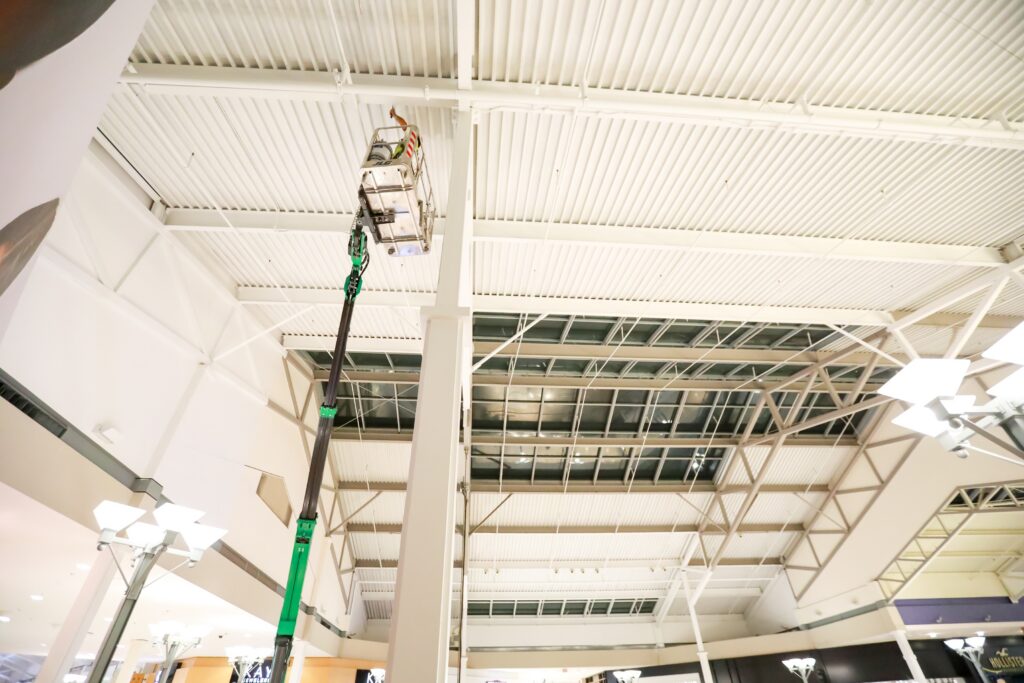
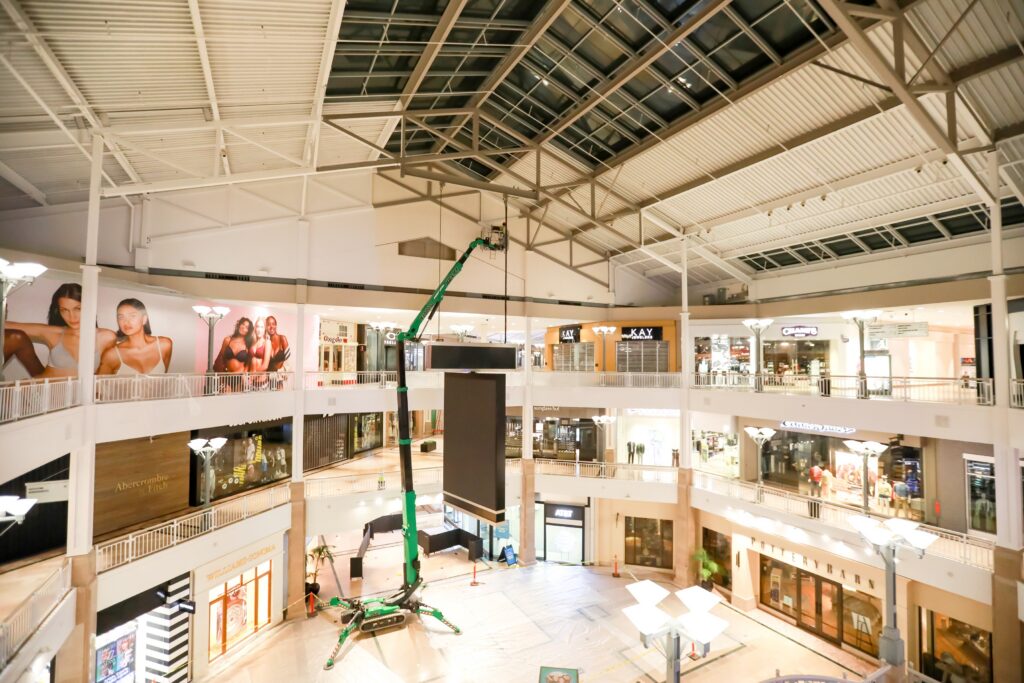
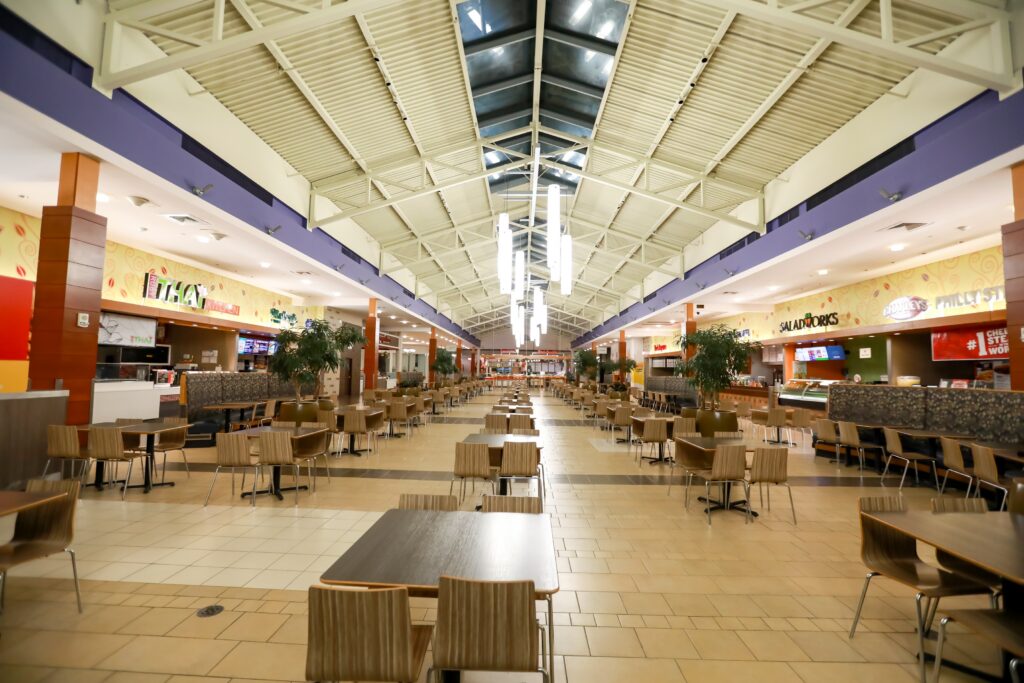
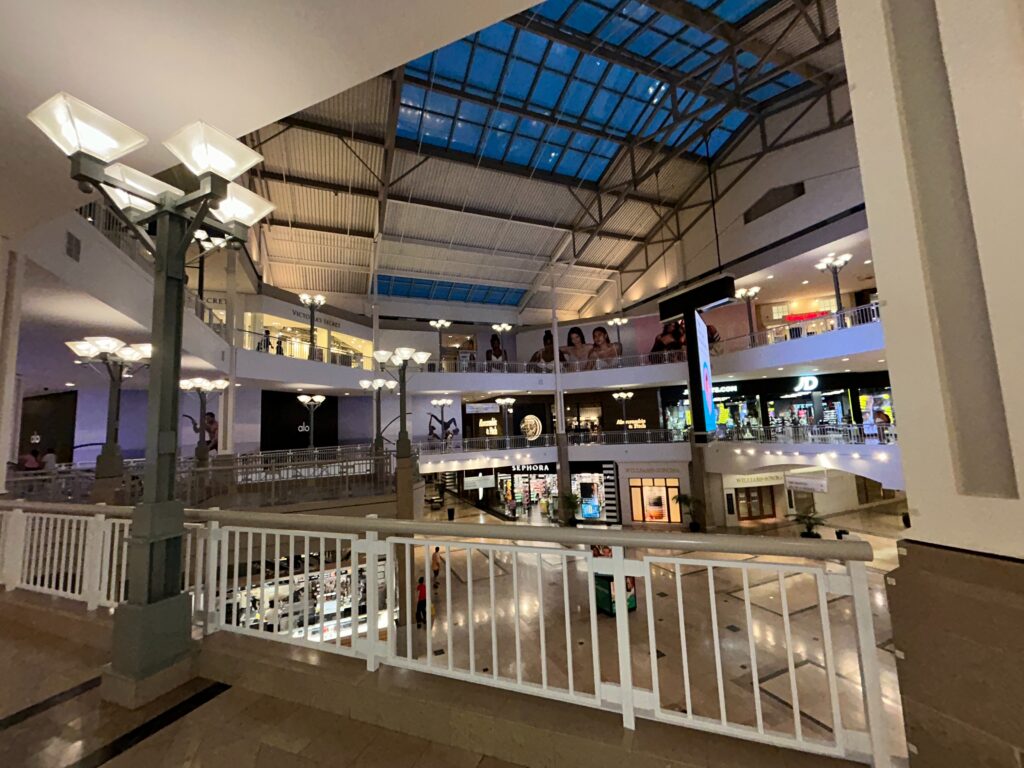
Alpine was brought in to complete a full interior repaint of the three-story mall, including structural steel, corrugated ceilings, drywall, and metal components.
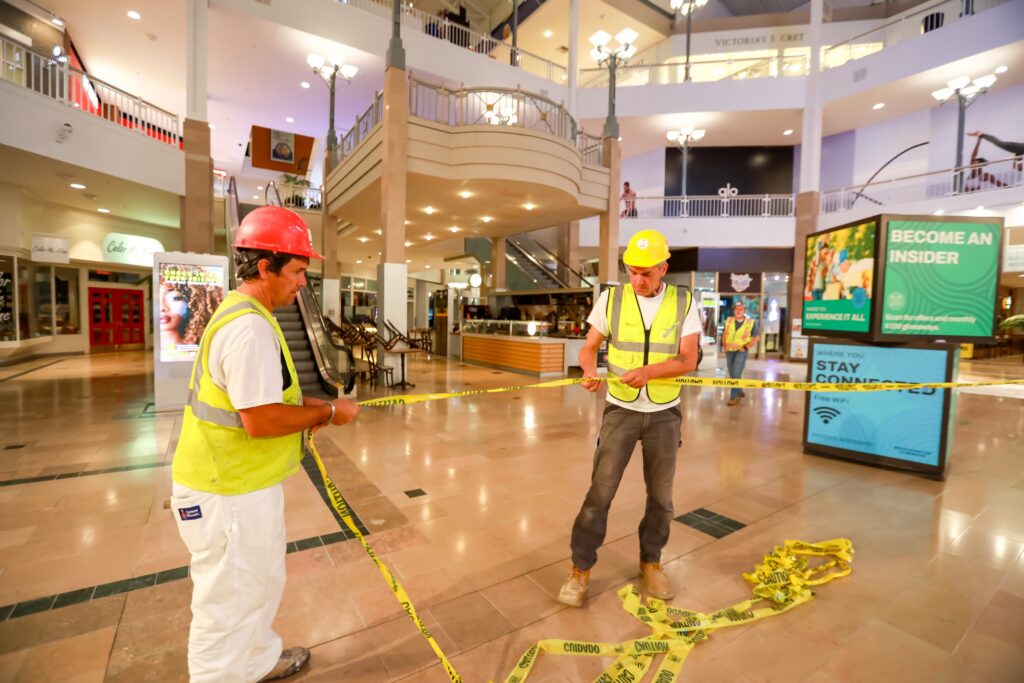
Because the facility remained fully operational throughout the renovation, every phase of the work revolved around a strict overnight schedule. Crews typically mobilized after the mall closed around 9 p.m., then worked against the clock to install containment, complete preparation and coating work, remove protection, and fully clean the space before shoppers returned the next morning.
Each shift had a hard stop. Crews arrived, installed containment, prepared surfaces, primed and coated, then reversed the process by removing plastic, cleaning, and clearing equipment so the space was ready for the public again.
By the time the doors reopened, the mall needed to look untouched. Floors had to be clean, sightlines clear, and there could be no indication that lifts, containment systems, and a full painting operation had occupied the space just hours earlier.
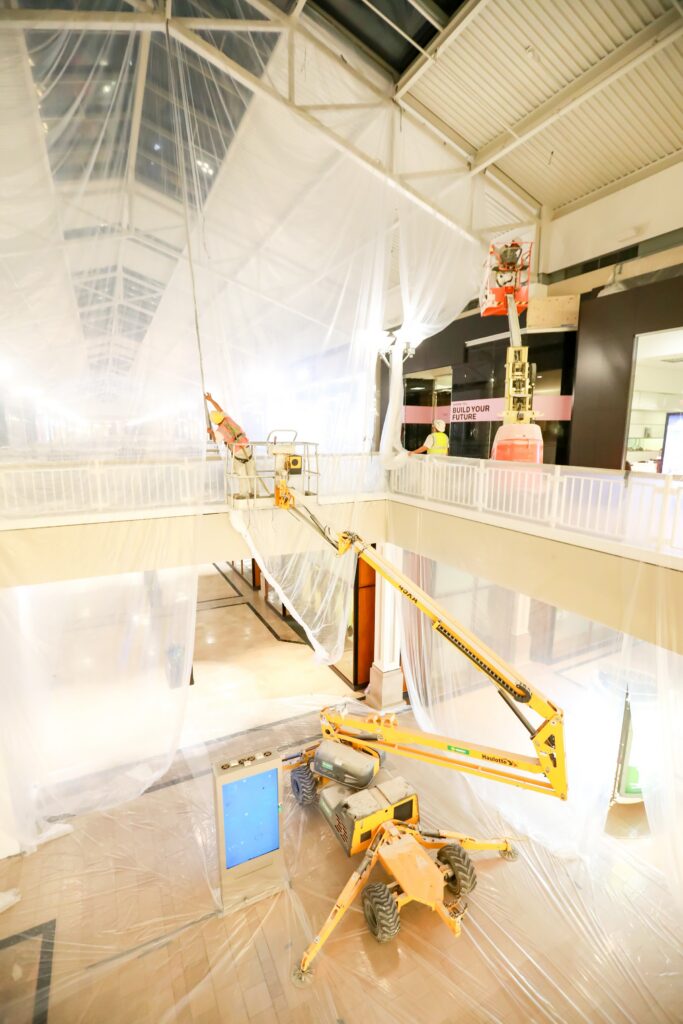
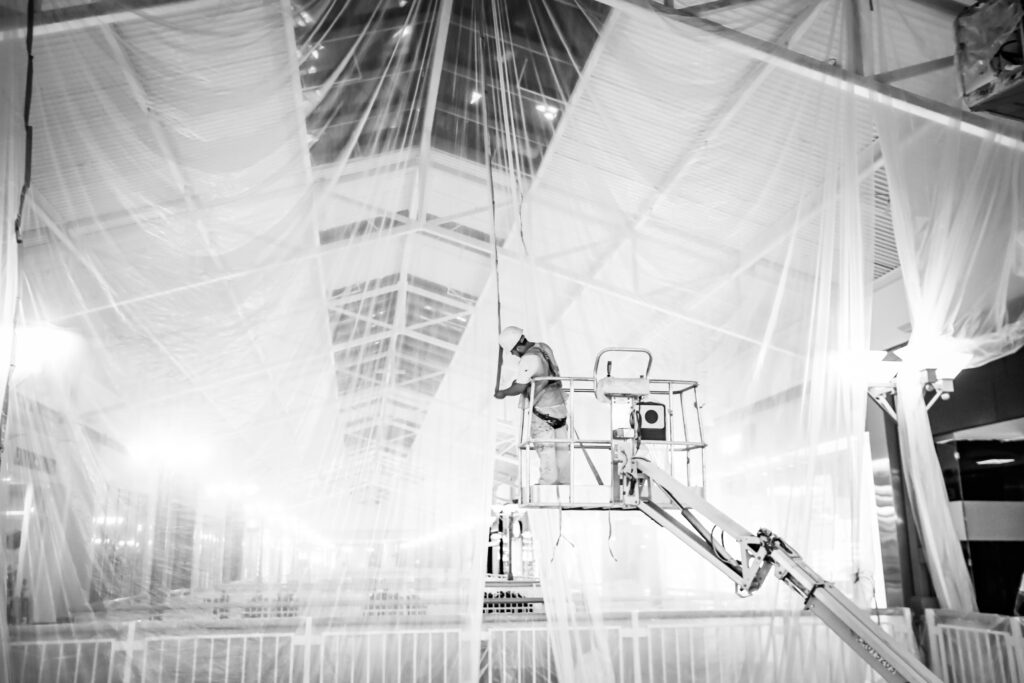
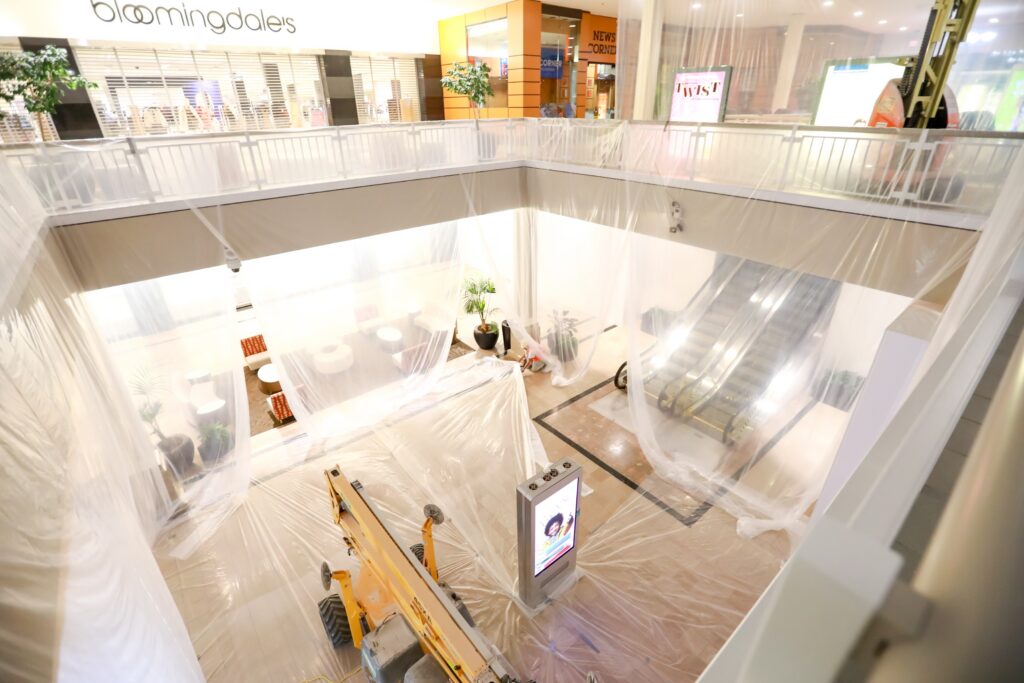
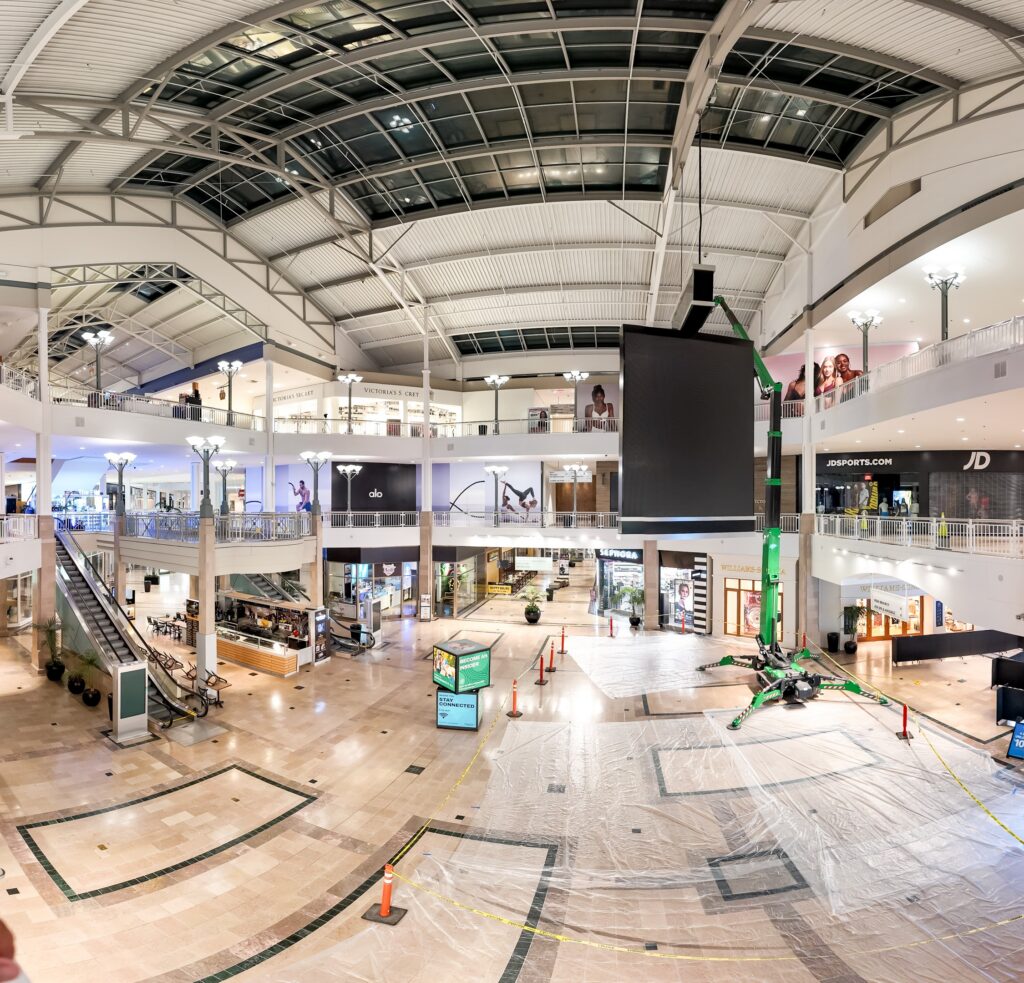
Overspray control became one of the most critical parts of the operation. Full containment systems had to be constructed nightly throughout active public spaces to protect storefronts, flooring, and common areas while overhead coatings were applied. Even minor containment failures had the potential to affect large sections of the mall, making protection and cleanup just as important as production itself.
The constant setup and teardown significantly reduced available painting time. On some nights, nearly half the shift was spent building and removing containment alone. The remaining hours had to be planned carefully and executed efficiently.
Much of the substrate sat high above the floor, but the upper levels of the mall came with strict load limitations. Standard lift choices were not an option, so the team employed a mix of atrium-style lifts with outriggers to distribute weight safely while still reaching the structure overhead.
Lighting created its own challenges. Work completed under artificial light sometimes revealed inconsistencies when viewed in daylight, requiring additional recoating to maintain a uniform appearance across highly visible areas.
For Alpine’s crew, the reward came during those early morning hours when everything was packed away and the mall stood ready for another day. Shoppers would pass through without ever realizing what had taken place overnight.
“Transforming a space that serves as a central community gathering place—and doing so under demanding conditions—was incredibly rewarding,” the company said. “Seeing the finished ceilings, railings, and atrium areas come together into a clean, modern environment reinforced the impact that skilled coating professionals can have on a public space.”